Cantonese Opera
Overview
Cantonese Opera is a traditional Chinese theatrical art form originating from Lingnan (South China). It is a fusion of music, singing, martial arts, acrobatics and acting, all performed in the Cantonese dialect.
Recognized as an intangible cultural heritage by UNESCO in 2009, Cantonese Opera serves not only as a cultural treasure for the people of Guangdong, the Hong Kong Special Administrative Region and the Macao Special Administrative Region, but also as an important window into traditional Chinese culture for audiences worldwide.
Historical Significance
Cantonese Opera dates back to the Ming Dynasty (1368-1644) and evolved significantly over the centuries. It became particularly popular during the 1950s and 1960s. Traditionally, performances were held in bamboo theaters, which could be easily assembled and dismantled. These performances were integral to local festivals and celebrations, often featuring stories from Chinese history, folklore and mythology.
Cultural Heritage and Modern Adaptations
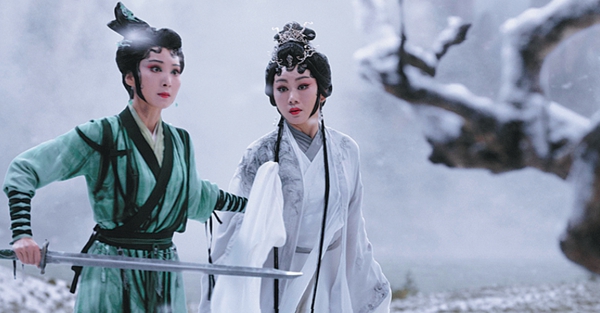
The art form has been preserved through generations, with iconic stories such as "The Legend of the White Snake". "White Snake" was adapted into China's first 4K Cantonese Opera film, blending traditional narratives with advanced cinematic techniques to reach younger and broader audiences.
Notable Productions and Performances
Several significant productions have brought Cantonese Opera to the forefront in recent years. "The Daughter of Sanshui: The Red Turban", performed at Beijing's Tianqiao Theater, tells the story of women's migration in the 1930s, highlighting themes of perseverance and unity. Another notable production, "Zheng Chenggong", portrays the historical figure's efforts during the Ming-Qing transition.
These productions often feature esteemed artists like Zeng Xiaomin, a leading figure in the Cantonese Opera scene, known for her dynamic performances and dedication to the art form.
Educational and Cultural Initiatives
Efforts to educate and engage new audiences have been central to the preservation of Cantonese Opera. Institutions like the Guangdong Cantonese Opera Institute have been pivotal in organizing performances and outreach programs, such as inviting students and young people to experience live shows. Additionally, the Cantonese Opera Art Museum in Guangzhou serves as both a repository of the art form’s history and a vibrant cultural hub, offering exhibitions and performances to the public.
Future Prospects
The future of Cantonese Opera is being actively shaped through initiatives like the West Kowloon cultural district's Xiqu Center in Hong Kong, which aims to promote traditional Chinese theater on an international scale. This world-class venue is designed to nurture new talent and audiences, ensuring that Cantonese Opera remains a dynamic and integral part of global cultural heritage.
With ongoing efforts to modernize and adapt the art form, Cantonese Opera continues to thrive, reaching new audiences and preserving its rich legacy for future generations. Article reference1. The world of Cantonese Opera. chinadaily.com.cn. 20242. Modern Cantonese Opera debuts in Guangzhou. chinaservicesinfo.com. 20223. Art festival captivates audience. chinadaily.com.cn. 20214. Cantonese Opera comes to Beijing. chinadaily.com.cn. 20245. Operatic masterpiece. chinadaily.com.cn. 2018ExpandPhoto Gallery(21 pictures)CategoriesArtsTagIntangible Cultural Heritage of Humanity in ChinaOpera and DramaRelatedSheng, Dan, Jing, Chou (Roles in Peking Opera)Hanju OperaBruce LeeLingnan CultureCatalogue1. Overview2. Historical Significance3. Cultural Heritage and Modern Adaptations4. Notable Productions and Performances5. Educational and Cultural Initiatives6. Future Prospects- - - []








